
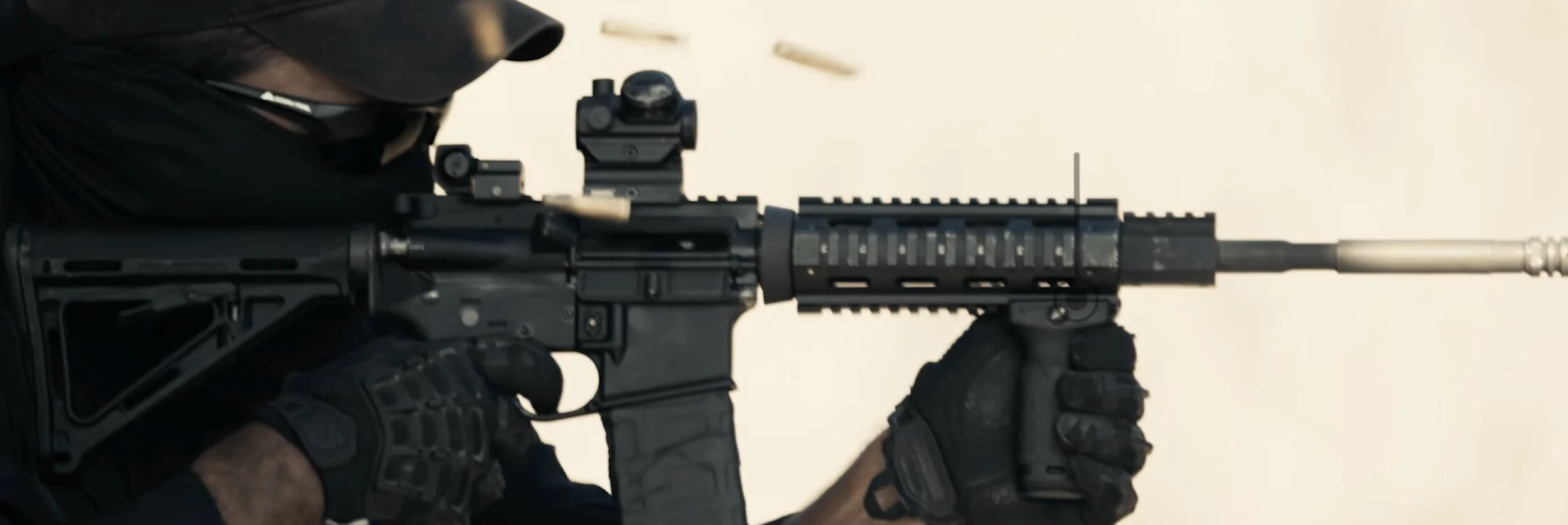
Forced Reset Triggers
Forced reset triggers (FRTs) are the fastest-cycling semi-automatic triggers ever produced for the AR-15 — each shot mechanically resets the trigger forward against your finger, allowing genuinely rapid follow-up fire while remaining fully semi-automatic (one trigger pull, one shot). After years of legal back-and-forth, the FRT category has stabilized as ATF-cleared semi-automatic equipment, and the aftermarket has expanded accordingly. Impact Guns carries FRT triggers from Partisan Triggers, Rare Breed, and other leading FRT makers.
Read our full FRT Triggers Buying Guide ↓
How a Forced Reset Trigger Works
A standard AR-15 trigger requires the shooter to release the trigger fully so it resets forward under spring pressure — a process that limits practical rate of fire. An FRT uses the bolt carrier’s rearward motion during cycling to mechanically push the trigger forward against your finger, forcing the reset to happen instantly as the next round chambers. The result: one trigger pull per shot (legally semi-automatic), but with reset speed that approaches the mechanical limits of the action. The bolt’s movement does the reset work the shooter normally does.
FRT Legal Status
The ATF initially classified some FRT designs as machine guns, triggering federal seizures and litigation. In 2024-2025, federal court rulings overturned that classification, and the ATF settled the leading cases — FRTs that operate as described above (one pull, one shot, mechanical reset assistance only) are legal semi-automatic equipment under federal law. State laws vary — California, New York, New Jersey, and several other states restrict or prohibit FRT-style triggers separately from federal law. Verify your state’s current law before ordering. The product listing notes restricted states.
Partisan Triggers Disruptor
The Partisan Triggers Disruptor is one of the newer entries in the FRT market — a drop-in forced reset trigger designed for AR-15 platforms. The Disruptor offers the FRT cycling advantage at a competitive price relative to established competitors, and Partisan has positioned itself as a serious player in the category. See our Partisan Triggers brand page for the full lineup and product details.
FRT Installation and Reliability
FRTs install like standard AR-15 fire control groups — trigger, hammer, and pins drop into a mil-spec lower receiver. The key compatibility check is buffer system tuning: FRTs cycle the action faster than standard triggers, and an under-gassed rifle or wrong buffer weight can cause the FRT to outrun the bolt’s ability to chamber rounds reliably. The standard recommendation is a properly gassed rifle (avoid heavily restricted adjustable gas blocks) with an H2 or H3 carbine buffer for tuning. Run quality ammunition during break-in; weak loads compound any cycling marginality.
What FRTs Are — and Aren’t
FRTs accelerate semi-automatic fire to its practical mechanical limits. They are not full-auto, they are not binary triggers (which fire on pull and release), and they are not bump stocks. Each shot still requires a discrete trigger pull — the mechanism just assists the reset. For practical purposes, a trained shooter with an FRT achieves rates of fire comparable to a slow full-auto burst, while remaining within semi-automatic legal classification. The category sits between standard semi-auto triggers and NFA-regulated full-auto equipment.
Frequently Asked Questions
Are FRT triggers legal?
At the federal level, yes — federal courts overturned the ATF’s machine gun classification, and current FRT designs operating as semi-automatic (one pull, one shot, mechanical reset assist) are legal federal semi-automatic equipment. State laws vary significantly — California, New York, New Jersey, and several other restrictive states prohibit FRTs separately from federal law. Verify your state’s current law before ordering.
What is the difference between an FRT and a binary trigger?
Binary triggers fire one shot on the trigger pull and a second shot on the release — legal in most states as semi-automatic but operating differently from a standard semi-auto. FRTs fire only on the pull, with the mechanism forcing the trigger forward for the next pull. Different mechanisms, different rates of fire, different legal histories. Both categories are currently legal federally; state restrictions differ between them.
Why won’t my FRT cycle reliably?
Almost always a gas or buffer problem. FRTs demand a properly gassed rifle and appropriate buffer weight — under-gassing or excessively restricted gas blocks cause short-stroking and reset failures. The standard fix is to verify mil-spec gas port size, run an H2 or H3 buffer in carbine builds, and use full-power ammunition. Cheap or light-load ammunition is the second most common cause of FRT cycling problems.
Browse AR-15 Triggers & Parts
All AR-15 Triggers • AR-15 Parts • Lower Receiver Parts • AR-15 Rifles